Settlement Repair
Differential foundation settlement — how it is confirmed, watched, and addressed.
San Diego County foundation settlement diagnostics — why a foundation settles, how to tell normal settling from a structural problem, and how independent local providers compare repair methods for your specific soil and settlement pattern.
Settlement RepairRequest ServiceEvery foundation settles a little. The question that actually matters is whether what your house is doing is that normal, even kind of settling, or differential settlement — one part of the foundation moving more than another. Tell us what you are seeing and we will help you work out which one it looks like, before anyone recommends a repair method.
Describe what your house is doing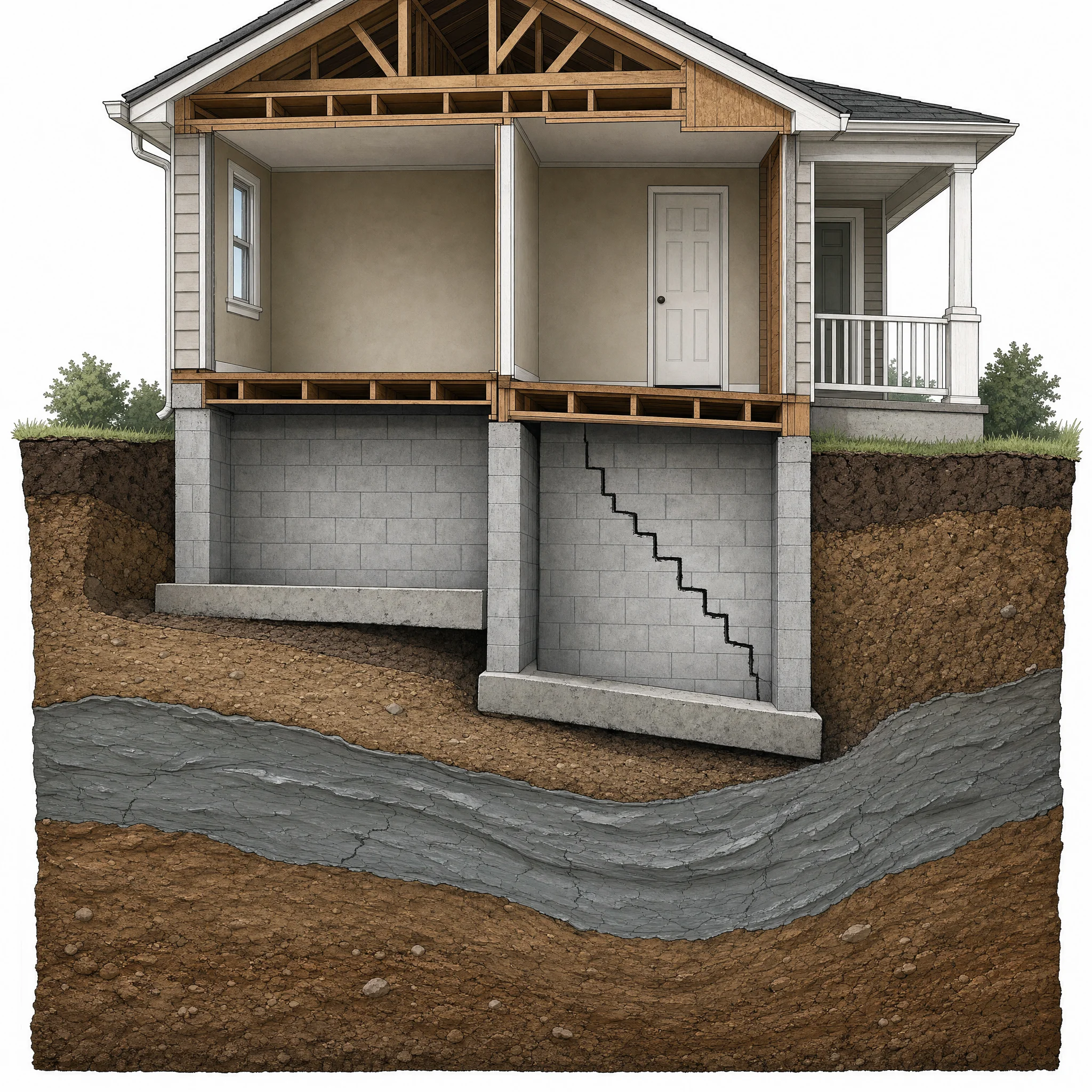
Differential foundation settlement — how it is confirmed, watched, and addressed.
How a foundation gets checked for active differential settlement, and what a single-visit look can and cannot tell you.
When a single inspection is not conclusive, and how movement gets watched over time instead of guessed at.
Steel push piers and helical piers, and how they transfer a settling foundation's load to stable soil.
Differential settlement in a slab-on-grade foundation, and the void-fill and stabilization methods that address it.
Nearly every foundation in existence settles by some small amount as soil compresses under its weight, and that alone is rarely a problem — it is a normal, expected part of a structure's life. What turns settlement into something worth addressing is when it happens unevenly: one corner or one section of the foundation moving down more than the rest. That is differential settlement, and it is the specific thing this site is organized around. The honest starting point is almost always the same, whether the eventual answer is "keep an eye on it" or "this needs a structural repair": a specific look at what your house is actually doing, not a guess from a symptom description. Settlement inspection covers how that confirmation happens, and settlement monitoring covers what to do when a single look is not enough to tell whether movement is ongoing.
Soil behavior varies meaningfully across the county and does not track cleanly with distance from the coast. Areas with a higher proportion of clay-heavy soil see more of the moisture-driven expansion-and-contraction cycling that is one of the more commonly discussed contributors to uneven settlement in this region — see settlement monitoring signatures by cause for how that mechanism actually works. Drainage and grading around a specific property matter just as much, and often more, than the general soil type for the block. None of that supports a specific conclusion about a specific house from a general description — soil, drainage, and the pattern of movement itself all have to be looked at, and in many cases a licensed structural or geotechnical engineer is the professional qualified to say what is actually happening underneath a given property.
The well-documented causes of differential settlement, read through what each one actually does to a monitoring trend line.
The specific signs that separate ordinary, settled house movement from active differential settlement worth addressing.
Two genuinely different repair principles for differential settlement, and what actually decides between them.
What a known or suspected settlement history actually requires when a property goes on the market.
Settlement Repair explains foundation settlement — what it is, how it is diagnosed, and how it is monitored and addressed — in plain language, and, where it can help, connects a visitor with an independent local provider. It does not perform the work itself.
No claimed years in business, no manufactured review counts, no promised response time, no assumed licensing or insurance on anyone's behalf. What can be verified is described; what cannot is left unsaid rather than implied.
The first real decision is not which repair method to use — it is whether the movement you are seeing needs a repair at all, or is settled and stable. That question comes before, not after, a repair-method comparison.
Any provider you are connected with is independent, not our employee — confirm their own licensing and insurance directly before any work begins.
Yes. Nearly every foundation settles a small, even amount as the soil beneath it compresses under load, and that alone is not a problem. What is worth a closer look is DIFFERENTIAL settlement — one part of the foundation moving down more than another. See normal settling vs. a structural problem for the specific signs that distinguish the two.
Pattern matters more than length. A diagonal, stair-step crack through masonry joints, or one that keeps reopening after being patched, is worth a closer look. A hairline crack that has not changed in months is usually not evidence of active movement. See normal settling vs. a structural problem for the full comparison.
It depends on what is already visible. A clearly active, worsening problem can often be confirmed on one visit. Something more ambiguous — a crack that might or might not be growing — is exactly the situation settlement monitoring exists for, using tools like crack gauges and elevation surveys over a period of weeks or months.
It depends on the foundation type and the confirmed cause. Steel push piers and polyurethane foam injection are two of the more commonly discussed approaches and work on different principles — see steel piers vs. foam injection for how they compare and when each fits.
No. This is an informational and lead-matching site — it explains foundation settlement and may connect you with an independent local provider, who is responsible for their own licensing, insurance, and work.
What you noticed, where, and roughly when it started is enough to start with. We will help you work out whether it looks like normal settling or something worth a closer look.
Request Service